
Rules and ethics
UK food creators working with Irish restaurants: VAT, contracts and data
A guide for UK food creators on Irish restaurant work covers VAT and the reverse charge, contract terms, data protection and travel, with a worked invoice example.
What to take away
- A UK food creator can still take Irish restaurant work as a service export under third-country rules.
- On a business-to-business invoice, supply sits in Ireland, so no UK VAT applies and the reverse charge does.
- Ireland's standard VAT rate is 23%; Revenue's services registration threshold is 42,500 euro.
- Name governing law, currency and a late payment rate in the contract before you film.
- UK GDPR and ICO guidance follow the Irish audience data you collect.
VAT on an invoice to an Irish restaurant
Start with one question: is the client a business or a private customer?
Advertising and marketing services supplied to a VAT-registered business are taxed where the customer belongs, placing the supply outside the scope of UK VAT. The Dublin restaurant accounts for Irish VAT under the reverse charge.
Ireland's standard VAT rate is 23%. You note it, you do not add it.
Place of supply
- Irish VAT-registered restaurant
- Ireland
- Irish private customer, such as a supper club host
- UK
What the invoice shows
- Irish VAT-registered restaurant
- Your UK VAT number, the client's IE number, a reverse charge note, no UK VAT
- Irish private customer, such as a supper club host
- UK VAT at the current UK rate, if you are registered
Check the current UK rate on VAT rates on different goods and services - GOV.UK.
An Irish VAT number starts with IE and carries seven digits plus a letter. "Outside the scope of UK VAT, reverse charge applies" is accepted invoice wording.
Revenue set Ireland's services registration threshold at 42,500 euro from 1 January 2025. Selling digital services straight to Irish consumers can push you near it. Cost the job with VAT and self-assessment for UK food creators invoicing restaurants and check when UK registration bites on GOV.UK.
Contracts, governing law and late payment
Put the deal in writing. Name the creator or agency, the Irish trading entity and any Irish agency in between.
Five terms cover most cross-border disputes.
[figure 2]
Terms to settle before you shoot
- Scopecontent, posts, channels, duration
- Fee and currencyeuros or pounds
- Governing law and courts named
- IP and usage rights for footage
- Data rolescontroller or processor
- Governing law and the courts that hear a dispute.
- Currency and who absorbs conversion fees.
- Data rolescontroller, joint controller or processor.
- Usage and paid media rights, priced separately.
- Liability cap and a late payment rate.
Silence on governing law means a court applies its own jurisdiction rules. Choose English or Irish law and name the city.
Ireland's European Communities (Late Payment in Commercial Transactions) Regulations 2012 allow the ECB refinancing rate plus eight percentage points. The UK's Late Payment of Commercial Debts (Interest) Act 1998 uses 8% above the Bank of England base rate, plus fixed compensation.
You must claim it, so write the trigger and rate into the contract; the wording is set out in commercial contracts explained.
Data protection when you collect Irish audience data
UK GDPR applies to a UK creator handling personal data, including giveaway entries. The ICO publishes the principles you must follow, covering lawfulness, minimisation, retention and security.
Decide the roles before you collect anything. A giveaway run for a restaurant usually makes you a controller or a joint controller. Joint arrangements need a written agreement naming who answers a subject access request.
Transfers need a named mechanism. Data moving from Ireland to the UK relies on the EU's adequacy decision for the UK. UK to US transfers rely on the UK International Data Transfer Agreement, the Addendum, or the UK Extension to the EU-US Data Privacy Framework.
Agree a retention period, and let the restaurant collect its own list if it wants to keep one. "Delete within 30 days of campaign end" is stronger than "delete on request". The ICO's Data sharing | ICO guidance lists the five questions to answer, and the duties are walked through in data protection duties.
Example: a 4,000 euro Dublin invoice
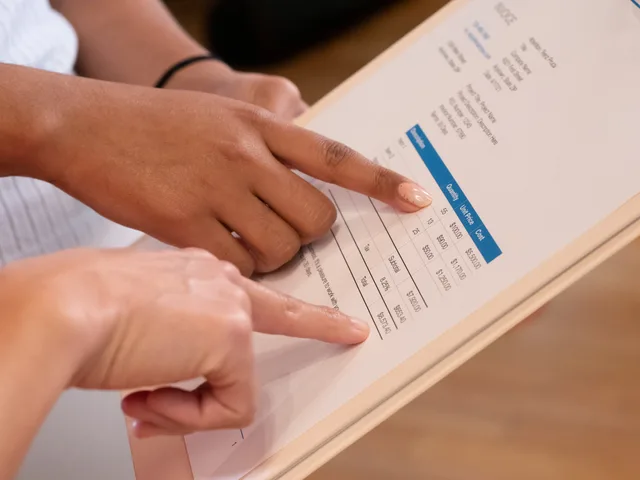
A Manchester creator agrees a 4,000 euro campaign with a VAT-registered Dublin restaurant. The creator is UK VAT registered.
[figure 6]
Cross-border invoice example
- 4,000 eurocampaign fee
- 0UK VAT added
- Reverse chargeapplies
The invoice shows 4,000 euro net, no UK VAT and the reverse charge note; the restaurant accounts for Irish VAT at 23%. The creator records the sale as outside the scope of UK VAT and keeps the contract and proof of supply for six years, as HMRC expects.
Common questions
Do I need an Irish VAT number?
Not for business-to-business work under the reverse charge; the restaurant accounts for the Irish VAT. You may need one above Revenue's consumer threshold.
Which law should govern the contract?
Either works: English law with English courts, or Irish law with Irish courts. Silence is the real problem.
Can I still travel to Ireland to film?
Yes. Short promotional shoots are business visits. Carry a restaurant letter stating purpose and dates, and declare valuable kit.
What if the restaurant pays late?
Only if the contract says so. Irish and UK statutes set default rates, but you have to invoke them.